

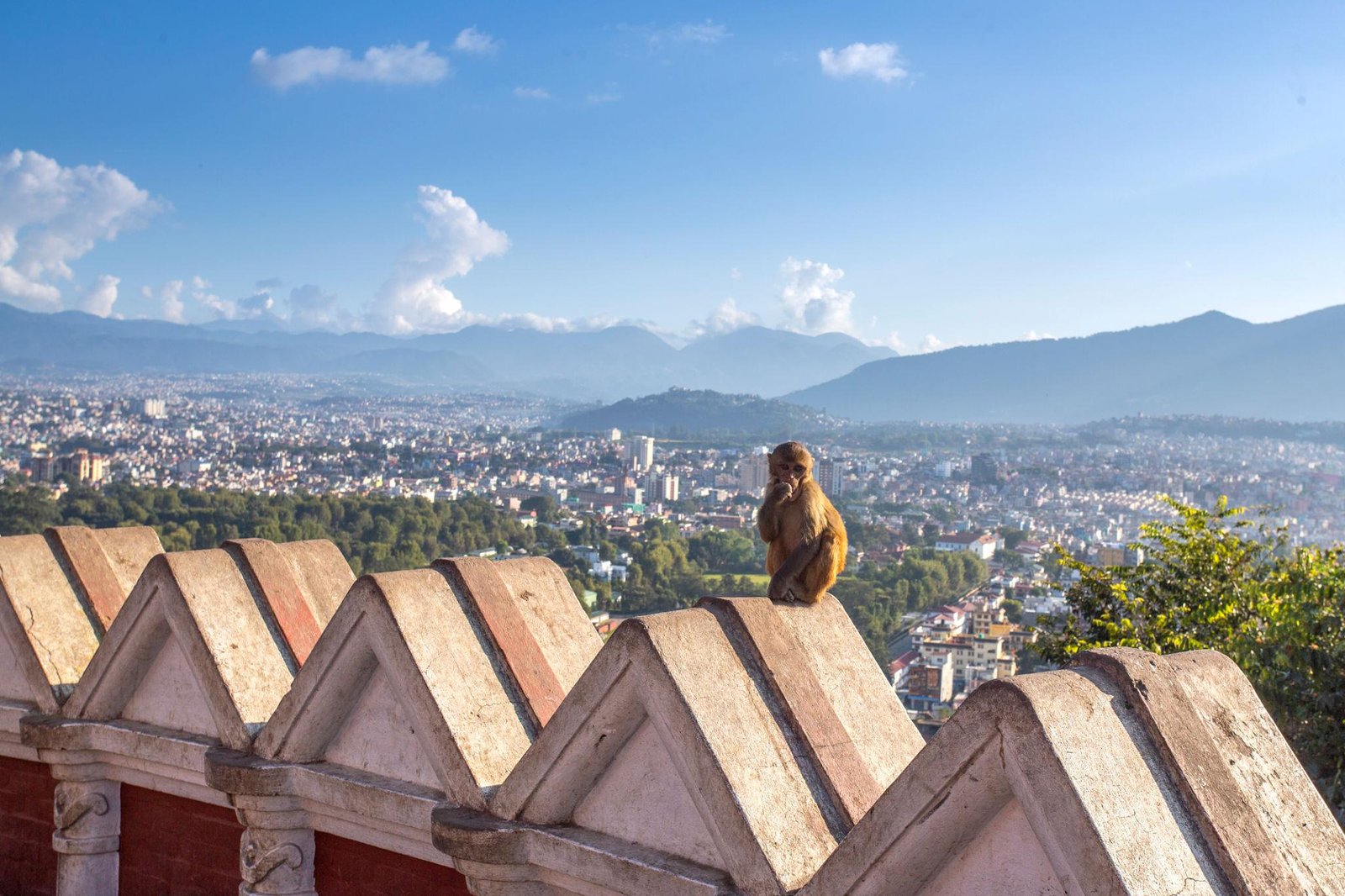

Swayambhunath, also known as the Monkey Temple, is one of the oldest religious sites in Nepal. Situated on a hilltop overlooking Kathmandu Valley, the stupa offers stunning panoramic views along with spiritual importance.
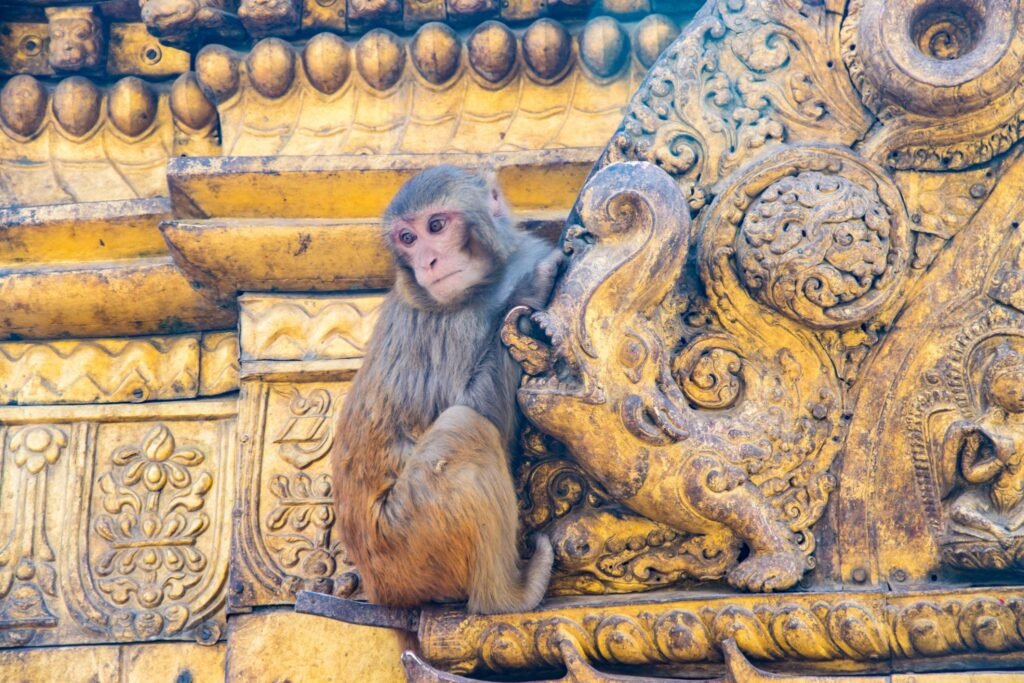
The site is sacred to both Hindus and Buddhists, representing religious harmony in Nepal. The temple complex includes prayer wheels, shrines, monasteries, statues, and ancient artwork. Monkeys living around the temple area are one of the reasons why it is called the Monkey Temple.
Visitors climb hundreds of stone steps to reach the stupa, where they can experience peace, spirituality, and breathtaking views of Kathmandu Valley
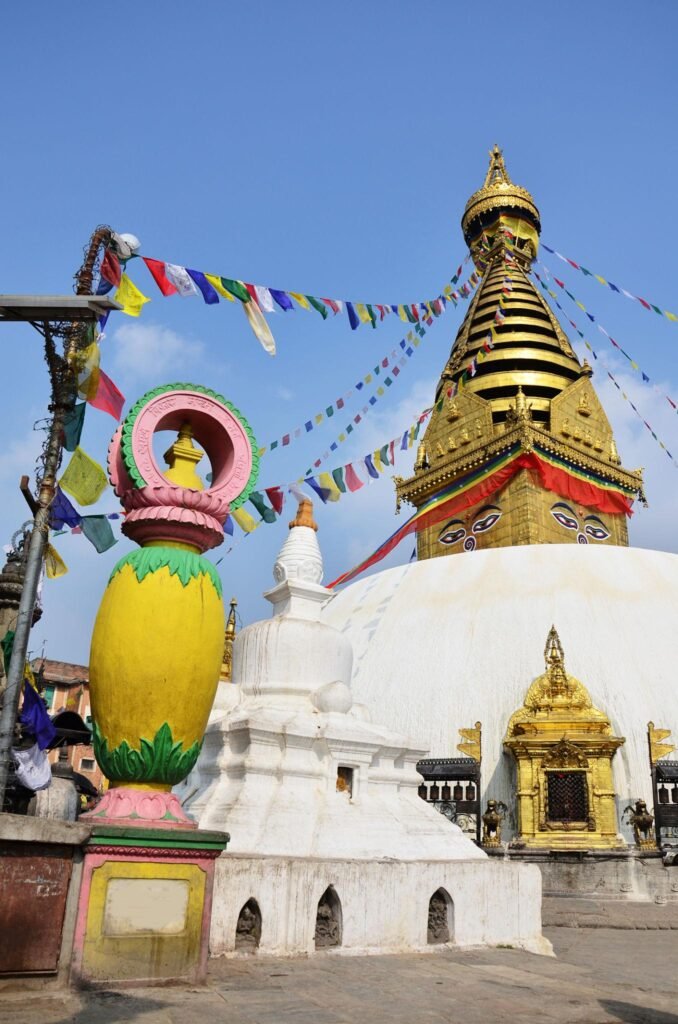
Key facts
- Location: Western hilltop, Kathmandu, Nepal
- Religious affiliation: Buddhism (with Hindu influence)
- Approximate origin: 5th century CE
- UNESCO designation: Part of Kathmandu Valley World Heritage Site (1979)
- Nickname: Monkey Temple
Historical background
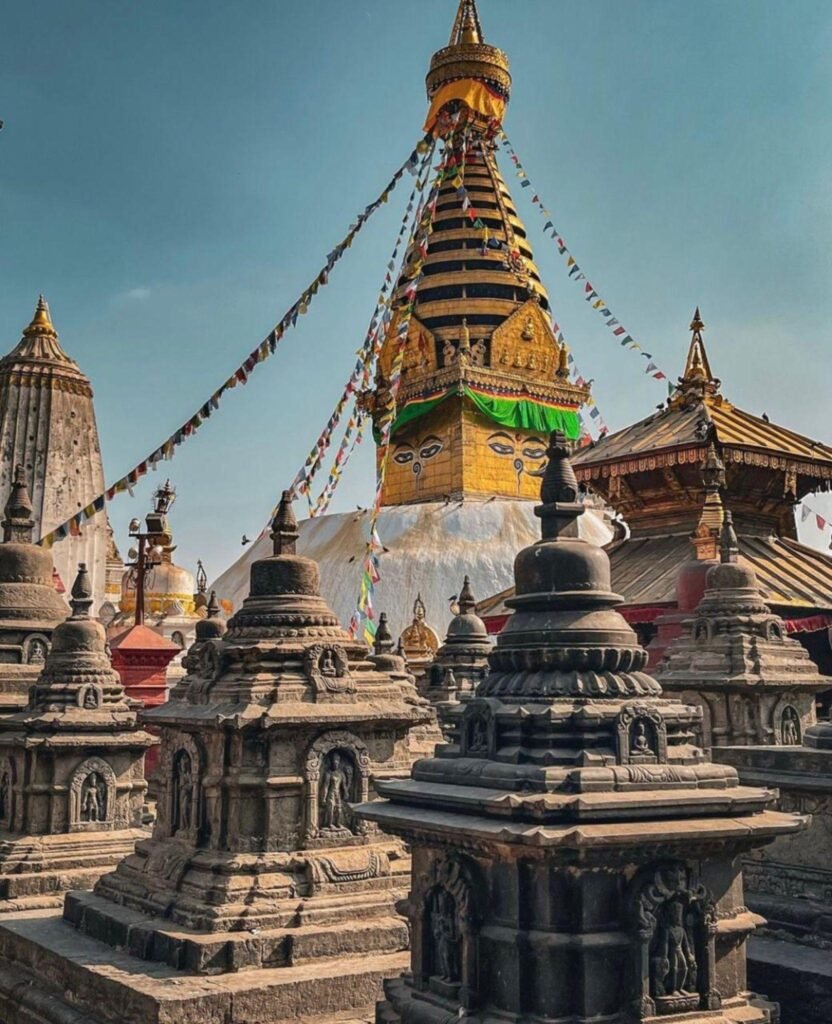
Swayambhunath’s origins trace back to the Licchavi period in the early 5th century CE, though the site has mythological associations dating far earlier. According to legend, the hill arose spontaneously from a primordial lake, marking the self-manifestation of enlightenment (“Swayambhu” meaning “self-born”). It has been an enduring pilgrimage destination for Buddhists and Hindus alike for over 1,500 years.
Architectural features
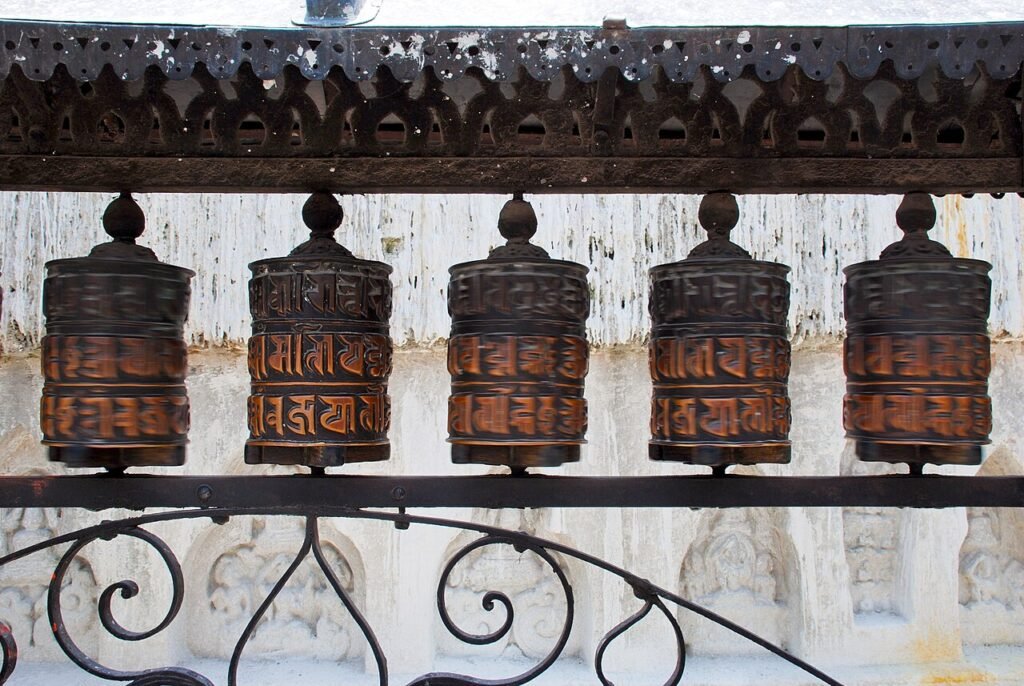
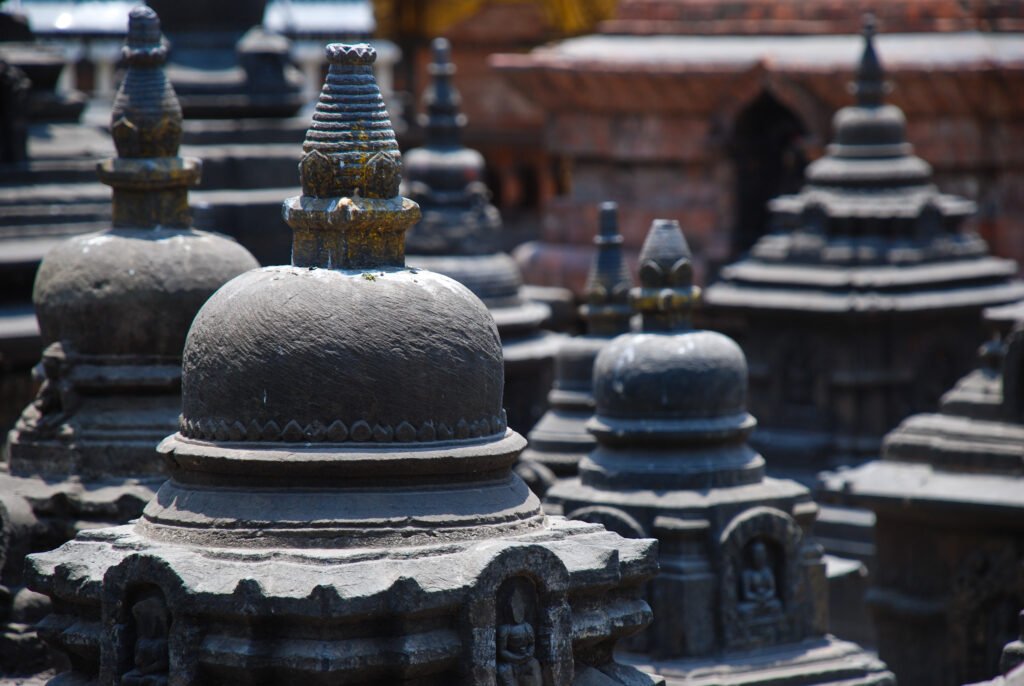
The main stupa consists of a whitewashed dome symbolizing the world, topped by a gilded spire adorned with the all-seeing eyes of Buddha. Surrounding the central structure are numerous shrines, temples, and prayer wheels. The complex also includes smaller stupas, statues of deities, and a variety of monasteries that display intricate artistry blending Buddhist symbolism with Nepalese craftsmanship.
Cultural and religious significance
Swayambhunath is revered by Tibetan Buddhists, Newar Buddhists, and Hindus. It symbolizes the unity of diverse faiths in Nepal. The site attracts pilgrims during major festivals such as Buddha Jayanti and Lhosar. Its continuous ritual activity, spinning prayer wheels, lighting butter lamps, and offering incense, embodies Kathmandu’s living spiritual heritage.
Visitor experience
Reaching the stupa requires ascending a steep staircase of over 300 steps, often lined with macaque monkeys, which lend the site its nickname. From the summit, visitors gain panoramic views of Kathmandu and the surrounding valley. The atmosphere combines tranquility, religious devotion, and cultural vitality, making Swayambhunath a defining landmark of Nepal’s capital.
Importance of Religious Tourism in Nepal
Religious tourism is one of the most important parts of Nepal’s tourism industry. Pilgrims and visitors traveling to temples, monasteries, and sacred sites help support local economies and create employment opportunities. Hotels, restaurants, guides, transportation services, and local handicraft businesses all benefit from tourism.
Religious sites also help preserve Nepal’s ancient traditions, architecture, and spiritual culture. Many communities depend on tourism income to improve education, healthcare, and infrastructure in their areas.
Nepal’s peaceful spiritual atmosphere also attracts travelers seeking meditation, yoga, and personal peace. Because of this, Nepal has become one of the world’s leading destinations for spiritual and cultural tourism.
Conclusion
Nepal is a land of faith, peace, and spirituality where religion and culture are deeply connected to everyday life. From the holy Pashupatinath Temple and sacred Muktinath Temple to the peaceful birthplace of Lord Buddha in Lumbini, every religious site in Nepal carries spiritual meaning and ancient traditions that have been preserved for centuries.
These sacred places are more than tourist destinations. They are symbols of devotion, harmony, compassion, and inner peace. The sound of temple bells, Buddhist prayers, flowing holy rivers, and peaceful monasteries create a spiritual atmosphere that touches the hearts of visitors from around the world.
Exploring religious sites in Nepal allows people to connect not only with history and culture but also with faith and spirituality. Whether someone visits for prayer, meditation, blessings, or personal peace, Nepal offers a journey that inspires the soul and brings a deeper understanding of life and humanity.
In the heart of the Himalayas, Nepal continues to shine as a sacred land where Hinduism and Buddhism exist together in harmony, spreading messages of peace, love, re