

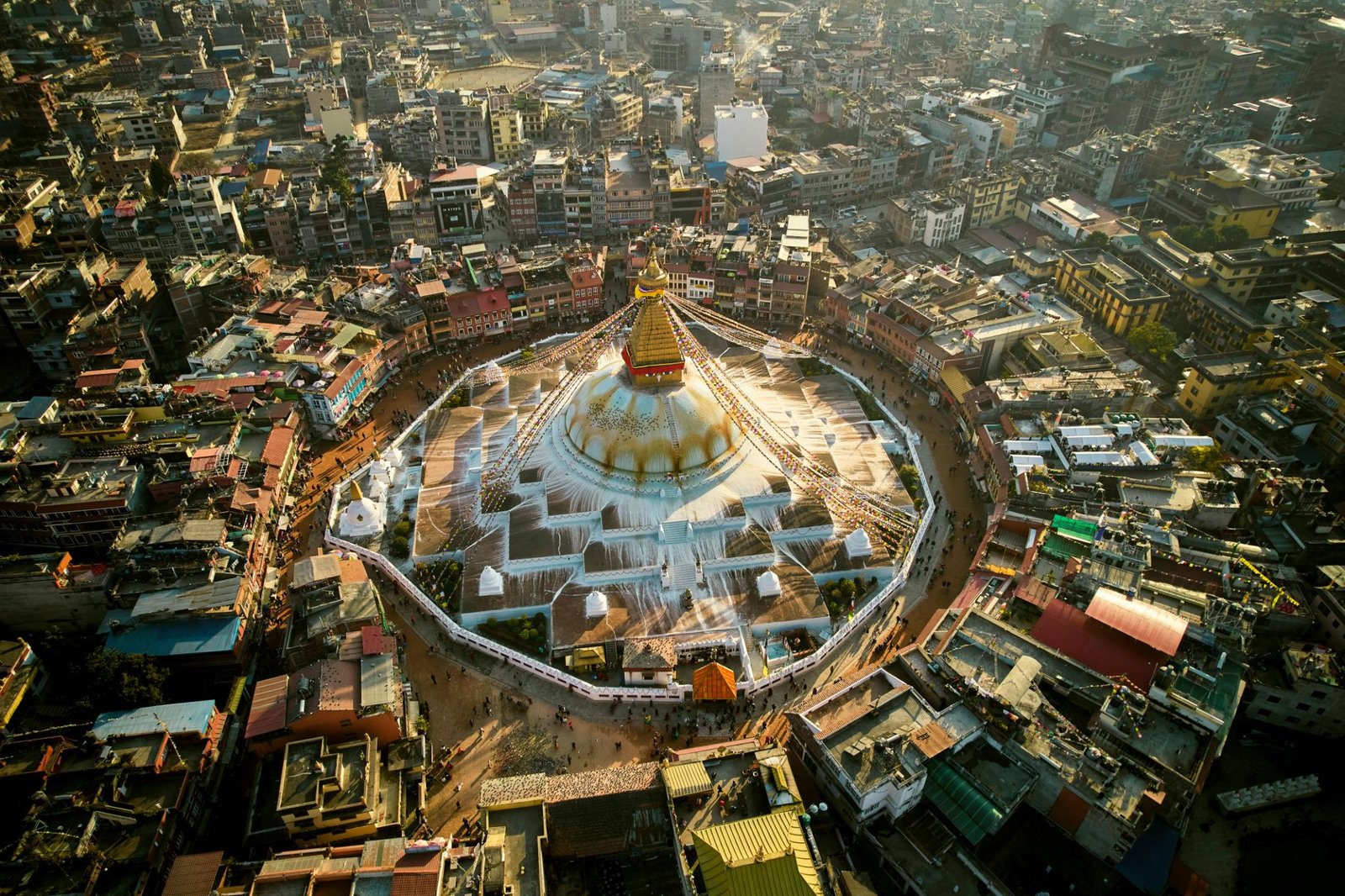

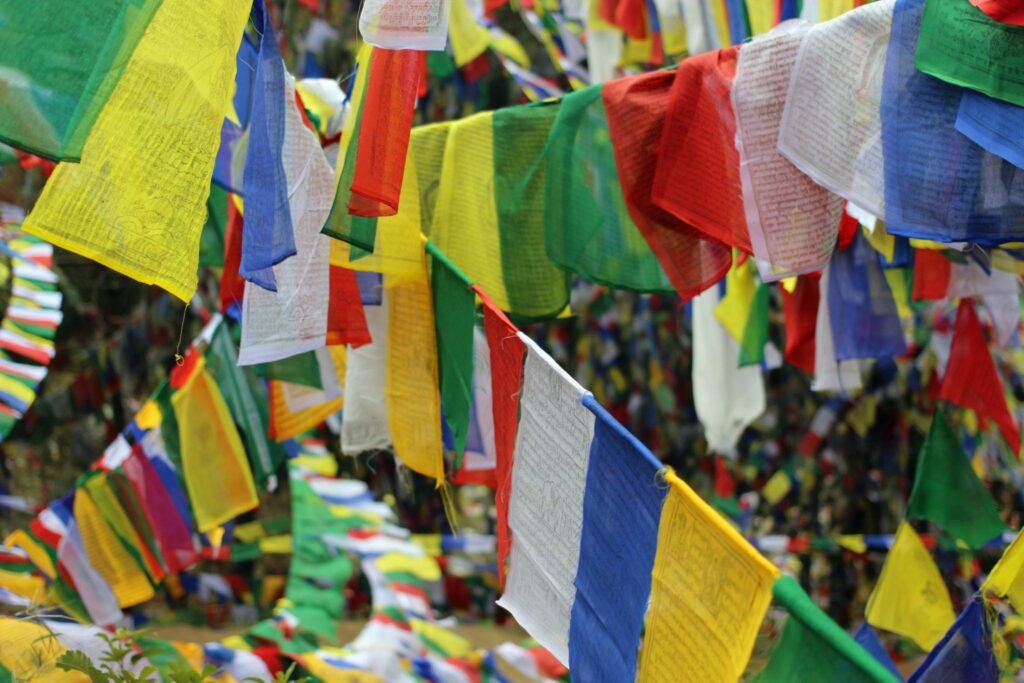
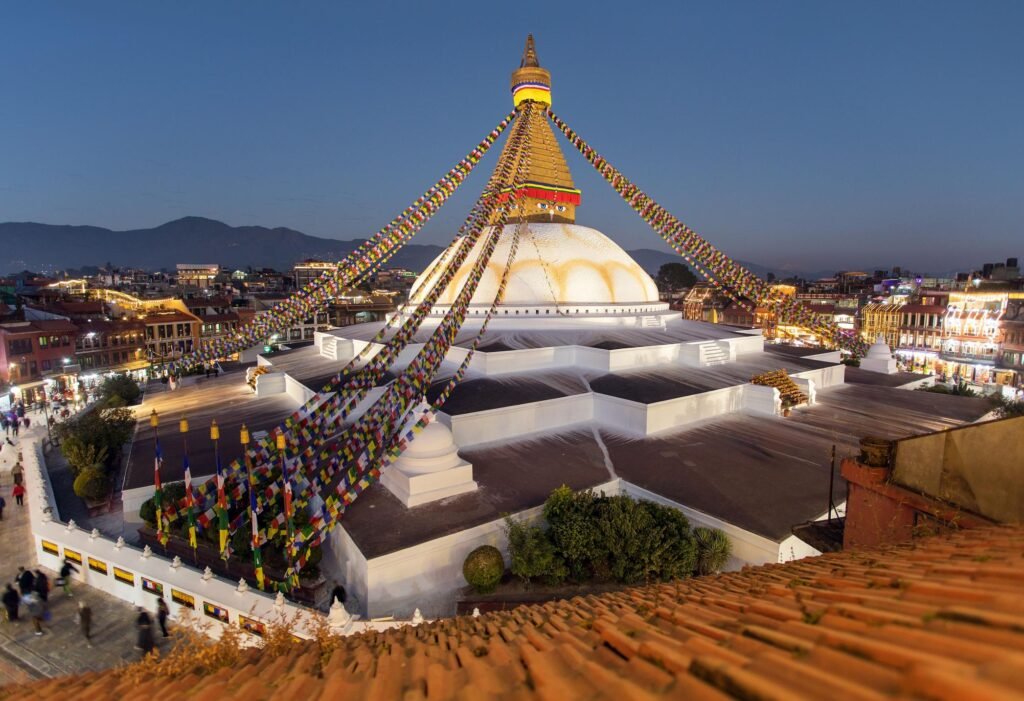
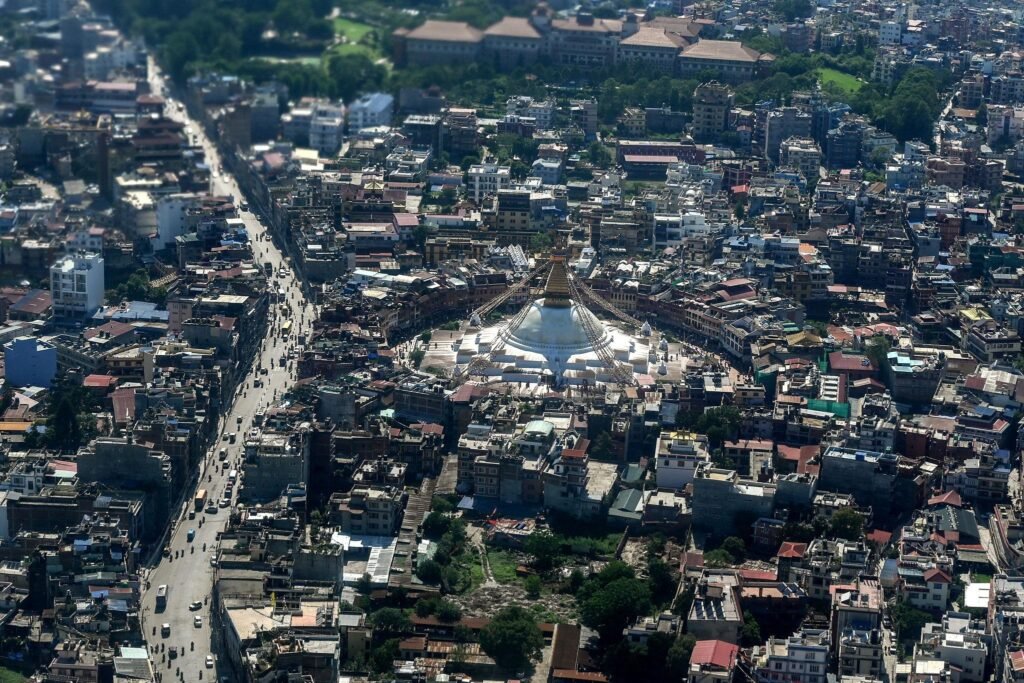
Boudhanath is one of the largest Buddhist stupas in the world and an important spiritual center for Tibetan Buddhism. Located in Kathmandu, the stupa is famous for its giant white dome, colorful prayer flags, and peaceful atmosphere.
Pilgrims walk around the stupa while spinning prayer wheels and chanting Buddhist prayers. The surrounding area is filled with monasteries, cafes, shops, and meditation centers. Boudhanath is especially beautiful during evenings when butter lamps are lit and prayers fill the air.
The stupa is a UNESCO World Heritage Site and one of the most iconic landmarks of Nepal. It attracts both spiritual visitors and tourists interested in Buddhist culture and Himalayan traditions.
Key facts
- Location: Kathmandu, Nepal
- UNESCO designation: 1979
- Height: About 36 meters (118 feet)
- Religion: Tibetan Buddhism
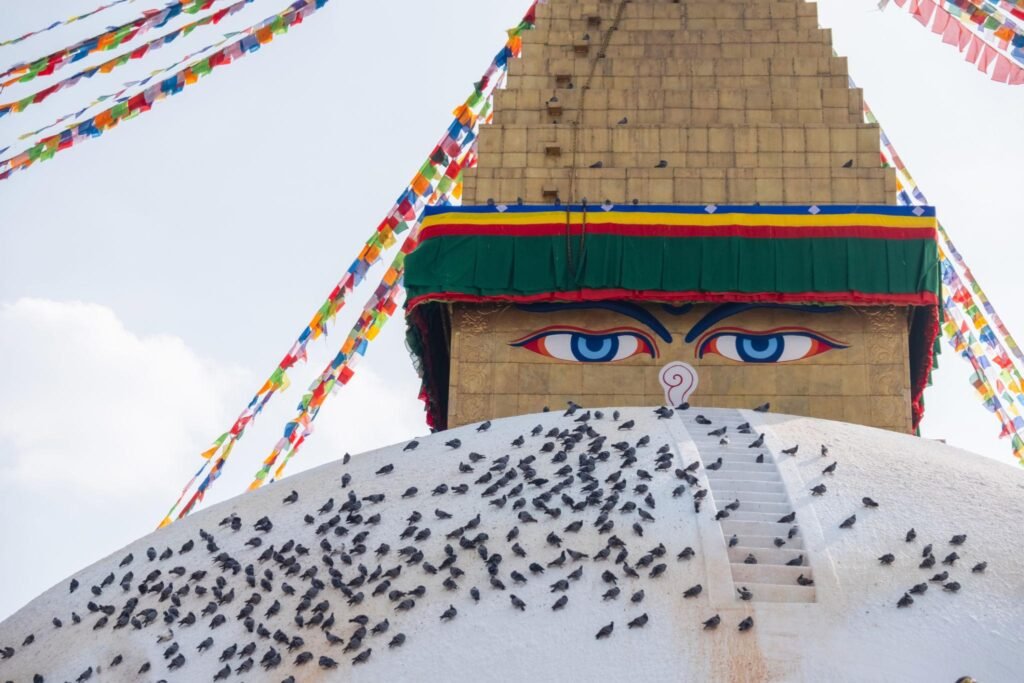
- Notable feature: Central white dome with Buddha’s all-seeing eyes
History and significance
Boudhanath dates back to around the 5th century CE, though some legends link its origin to earlier Lichchhavi-era rulers. It became especially important after the 1959 Tibetan exodus, when many refugees settled nearby, transforming the area into a center of Tibetan culture and monastic study.
The stupa’s massive mandala base represents the earth, topped by a white dome symbolizing water and a gilded spire with 13 tiers representing stages of enlightenment. Painted on all four sides are Buddha’s eyes, signifying wisdom and compassion. Surrounding prayer wheels, monasteries, and shrines create a meditative circuit for circumambulation (kora).
Religious and cultural role
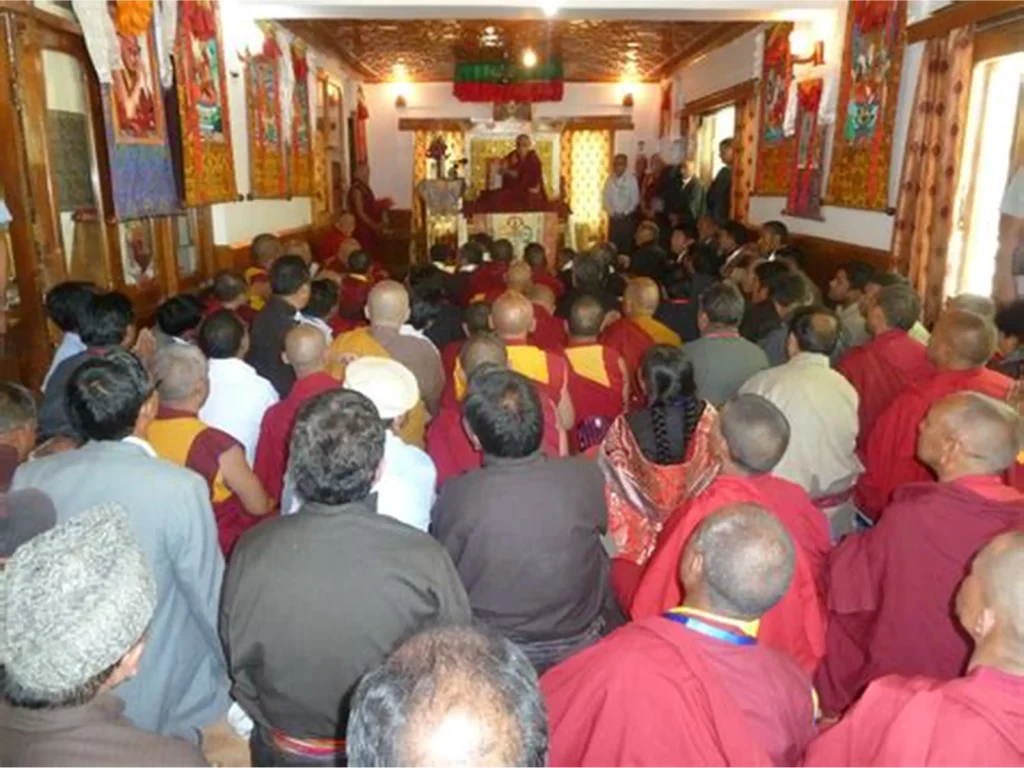
Boudhanath serves as a key pilgrimage site for Buddhists from Nepal, Tibet, Bhutan, and beyond. Daily rituals include the spinning of prayer wheels and offerings of butter lamps. The area hosts vibrant celebrations during Losar (Tibetan New Year) and Buddha Jayanti, attracting thousands of devotees and tourists alike.
Restoration and preservation
After the 2015 Nepal earthquake severely damaged the spire, the stupa underwent major restoration completed in 2016, funded largely by local Buddhist communities. Today, it remains both a sacred monument and a symbol of Nepal’s resilience and spiritual diversity.
Importance of Religious Tourism in Nepal
Religious tourism is one of the most important parts of Nepal’s tourism industry. Pilgrims and visitors traveling to temples, monasteries, and sacred sites help support local economies and create employment opportunities. Hotels, restaurants, guides, transportation services, and local handicraft businesses all benefit from tourism.
Religious sites also help preserve Nepal’s ancient traditions, architecture, and spiritual culture. Many communities depend on tourism income to improve education, healthcare, and infrastructure in their areas.
Nepal’s peaceful spiritual atmosphere also attracts travelers seeking meditation, yoga, and personal peace. Because of this, Nepal has become one of the world’s leading destinations for spiritual and cultural tourism.
Conclusion
Nepal is a beautiful country filled with spiritual places, ancient temples, peaceful monasteries, and rich cultural traditions. Religious sites like Pashupatinath Temple, Lumbini, Boudhanath, and Muktinath Temple attract thousands of visitors every year. These places are not only important for religion but also for Nepal’s tourism, culture, and economy.
Exploring religious sites in Nepal gives travelers a chance to experience peace, history, tradition, and natural beauty all together. The warm hospitality of local people and the spiritual atmosphere make every visit special and memorable. Whether someone visits Nepal for prayer, meditation, culture, or travel, the country offers a unique and unforgettable experience in the heart of the Himalayas.