

Nepal is one of the most beautiful travel destinations in the world. Known for its high mountains, rich culture, ancient temples, and adventure activities, Nepal offers unforgettable experiences for every traveler. From the breathtaking peaks of Mount Everest to the peaceful birthplace of Gautama Buddha in Lumbini, Nepal is a land full of beauty and history.
Why Visit Nepal?
Nepal is a dream destination for nature lovers, trekkers, and adventure seekers. The country is home to eight of the world’s fourteen highest mountains, including Mount Everest. Visitors can enjoy trekking, hiking, mountain flights, rafting, jungle safari, and cultural tours.
Nepal is also famous for its warm hospitality and unique traditions. Every city and village has its own story, culture, and festivals, making travel in Nepal even more special.
Top Places to Explore in Nepal
Nepal is a country full of natural beauty, culture, and adventure. From high mountains to peaceful lakes and historical temples, every place in Nepal offers something unique. Here are some of the best places to explore in Nepal:
1. Kathmandu Valley
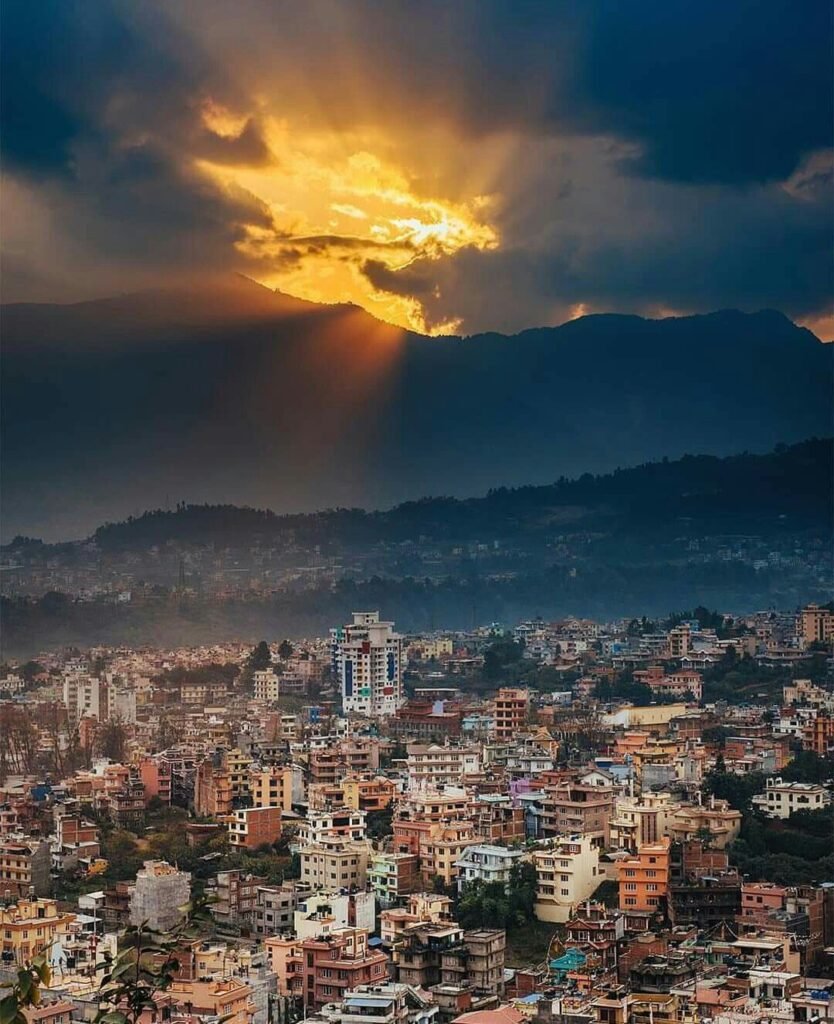
Kathmandu is the capital and largest city of Nepal, situated in the bowl-shaped Kathmandu Valley at about 1,400 m (4,600 ft) above sea level. As the political, cultural, and economic heart of the nation, it serves as the gateway to the Himalayas and hosts several of Nepal’s most important religious and historical sites
Key facts
- Country: Nepal
- Elevation: ~1,400 m (4,600 ft)
- Population: ≈1.44 million (2025)
- Area: 49 km²
- UNESCO sites: 7 within Kathmandu Valley
Geography and history
Nestled among the Himalayan foothills, Kathmandu lies near the confluence of the Bagmati and Vishnumati rivers. The valley’s fertile terrain has supported continuous settlement since at least the 7th century CE. Legends trace its creation to the bodhisattva Manjushri, who drained an ancient lake to reveal habitable land. Over centuries the Licchavi, Malla, Shah, and Rana dynasties shaped its art, trade, and architecture. The name “Kathmandu” derives from Kasthamandap, a wooden pavilion built from a single tree.
Cultural heritage
The city contains seven UNESCO World Heritage Sites, including Kathmandu Durbar Square, Swayambhunath Stupa (Monkey Temple), Boudhanath Stupa, and Pashupatinath Temple. These Hindu and Buddhist monuments exemplify the Newar people’s craftsmanship intricately carved wood, gilded roofs, and courtyards used for centuries of ritual and royal ceremony. Festivals such as Indra Jatra, Dashain, and Tihar fill the streets with masked dances, chariot processions, and lights.
Lifestyle and cuisine
Kathmandu reflects Nepal’s multicultural society, blending Hindu and Buddhist traditions with smaller Muslim and Christian communities. Daily meals center on dal bhat (lentils and rice) and momos (dumplings), alongside rich Newari specialties. The city’s rhythm moves from temple bells at dawn to lively nightlife, balancing ancient spirituality with cosmopolitan energy.
Economy and modern life
Tourism drives much of Kathmandu’s economy, complemented by trade, education, and administration. The city’s Tribhuvan International Airport links Nepal to Asia and beyond. Modern districts like Thamel bustle with hotels, cafés, and trekking outfitters, while traditional bazaars at Asan Bazaar and Indra Chowk.
2. Pokhara – The City of Lakes
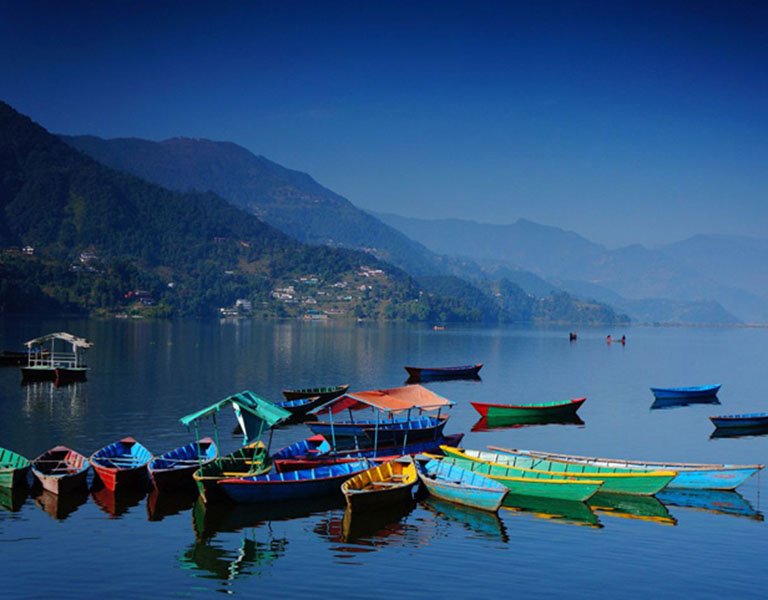
Pokhara is a major city in central Nepal, known for its stunning Himalayan views, tranquil lakes, and role as the gateway to the Annapurna mountain range. It is Nepal’s second-largest city by population and a hub for adventure tourism and trekking.
Key facts
- Country: Nepal
- Province: Gandaki Province
- Population: About 600,000 (2023 est.)
- Elevation: ~822 meters (2,697 feet)
- Famous for: Phewa Lake, Annapurna Base Camp treks, and mountain scenery
Geography and setting
Pokhara lies about 200 kilometers west of Kathmandu, nestled in a broad valley carved by the Seti River. The city sits beside Phewa Lake, reflecting peaks such as Machhapuchhre (Fishtail) and Annapurna. Its combination of lakeside serenity and proximity to the Himalayas makes it one of South Asia’s most scenic urban areas.
Tourism and economy
Tourism is Pokhara’s economic cornerstone, attracting trekkers bound for the Annapurna Circuit and Base Camp. Visitors also come for paragliding, boating, mountain biking, and cultural experiences. The Lakeside district is filled with guesthouses, cafes, and trekking agencies, while the city’s newer areas host educational and business centers.
Culture and lifestyle
Pokhara’s population is ethnically diverse, including Gurung, Magar, and Newar communities, among others. Cultural sites include Bindhyabasini Temple and the World Peace Pagoda. Festivals such as Dashain and Tihar are celebrated vibrantly, and the city is known for its relaxed atmosphere and artistic scene.
Infrastructure and development
Pokhara is connected by the Pokhara International Airport, opened in 2023 to boost international access. It is also a growing center for education and healthcare in western Nepal. Sustainable tourism initiatives aim to balance urban expansion with environmental preservation around its lakes and hills.
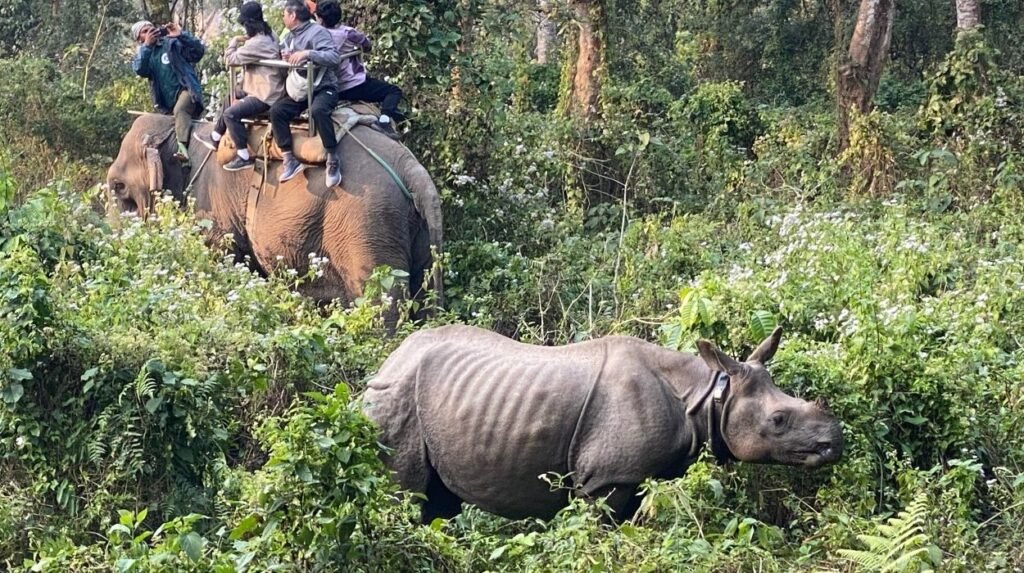
3. Chitwan National Park – Wildlife and Jungle Adventure
Chitwan National Park is one of the best places for wildlife adventure in Nepal. It is home to rare animals like one-horned rhinos, Bengal tigers, elephants, and crocodiles. Visitors can enjoy jungle safaris, canoe rides, bird watching, and cultural programs with the local Tharu community. It is a great destination for nature and wildlife lovers. Chitwan National Park is a protected area in south-central Nepal, recognized as the country’s first national park and a UNESCO World Heritage Site. It preserves one of the last remaining habitats of the Terai lowlands, notable for its rich biodiversity and population of endangered species
Key facts
- Location: Chitwan District, Bagmati Province, Nepal
- Established: 1973
- Area: 952.6 km²
- UNESCO designation: 1984
- Major wildlife: Bengal tiger, one-horned rhinoceros, gharial crocodile
Ecology and wildlife
The park’s subtropical landscape of dense sal forests, grasslands, and riverine ecosystems supports over 700 wildlife species. It shelters critical populations of the greater one-horned rhinoceros and Bengal tiger. Other species include sloth bears, Asian elephants, leopards, and numerous reptiles and birds, making it a prime destination for wildlife observation and research.
Geography and climate
Situated in the Inner Terai lowlands at the base of the Himalayas, Chitwan National Park spans the floodplains of the Rapti, Reu, and Narayani rivers. The area experiences a monsoonal climate with hot, humid summers and mild winters, fostering lush vegetation and diverse ecological niches.
Conservation and community involvement
Chitwan pioneered Nepal’s modern conservation movement. Early anti-poaching campaigns and buffer-zone programs integrated local Tharu communities in park management, promoting sustainable livelihoods. The park’s success has influenced conservation policy nationwide, though balancing tourism growth and habitat protection remains an ongoing challenge.
Tourism and access
Safari tours, birdwatching, and canoe trips along the Rapti River attract domestic and international visitors. The main entry points are Sauraha and Meghauli, accessible from Bharatpur via road or short flights from Kathmandu and Pokhara. Tourism revenue contributes significantly to local economies and park maintenance.
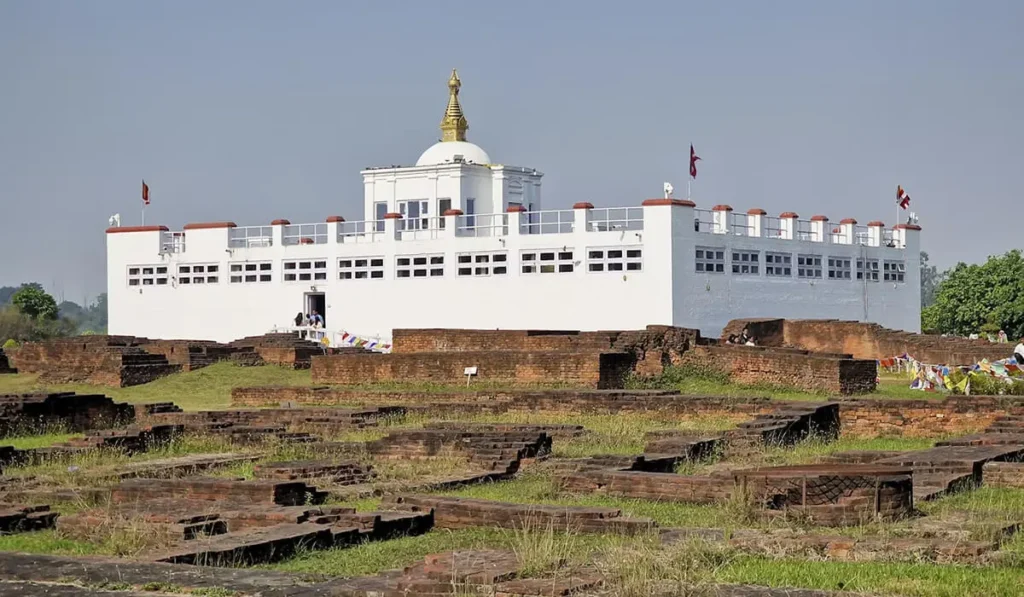
4. Lumbini – The Birthplace of Buddha
Lumbini is one of the most important spiritual places in the world. It is the birthplace of Gautama Buddha and attracts thousands of visitors every year. The peaceful environment, monasteries, and the Maya Devi Temple make Lumbini a perfect place for meditation and learning about Buddhist history.Lumbini is a sacred archaeological and pilgrimage site in the Rupandehi District of Nepal’s Terai plains. Revered as the birthplace of Gautama Buddha, it holds deep significance for Buddhists worldwide and is recognized as a UNESCO World Heritage Site. The tranquil complex attracts millions of pilgrims and tourists seeking peace, spirituality, and historical insight.
Key facts
Area: Approx. 4.8 × 1.3 km protected heritage zone
Location: Rupandehi District, southwestern Nepal
UNESCO status: World Heritage Site (since 1997)
Main shrine: Maya Devi Temple (birthplace of Buddha)
Founded: c. 6th century BCE (Buddha’s birth, c. 563 BCE)
Historical and spiritual significance
Lumbini is believed to be the site where Queen Maya Devi gave birth to Siddhartha Gautama, who became the Buddha. Ancient travelers like Faxian and Xuanzang described it as a “piece of heaven on earth.” In 249 BCE, Emperor Ashoka visited Lumbini and erected the Ashokan Pillar, inscribed in Brahmi script, confirming the site’s authenticity as Buddha’s birthplace.
Major landmarks
Within the Sacred Garden, the Maya Devi Temple houses archaeological remains, a marker stone denoting the exact birthplace, and the Puskarini (sacred pond) where Queen Maya is said to have bathed. Nearby are the Ashokan Pillar, the Nativity Sculpture, and the Eternal Peace Flame, symbolizing universal harmony.
The surrounding Monastic Zone is divided into eastern and western sectors—Theravāda monasteries to the east and Mahāyāna/Vajrayāna to the west—built by countries such as Japan, Thailand, China, and Myanmar.
Cultural and natural features
Complementing the religious monuments are the World Peace Pagoda, built by Japanese Buddhists; the Lumbini Museum, displaying over 12,000 artifacts and ancient coins; and the Lumbini Crane Sanctuary, a refuge for the endangered sarus crane.
Nearby heritage sites—Tilaurakot (ancient Kapilavastu) and Ramagrama Stupa—extend the historical landscape of Buddha’s early life.
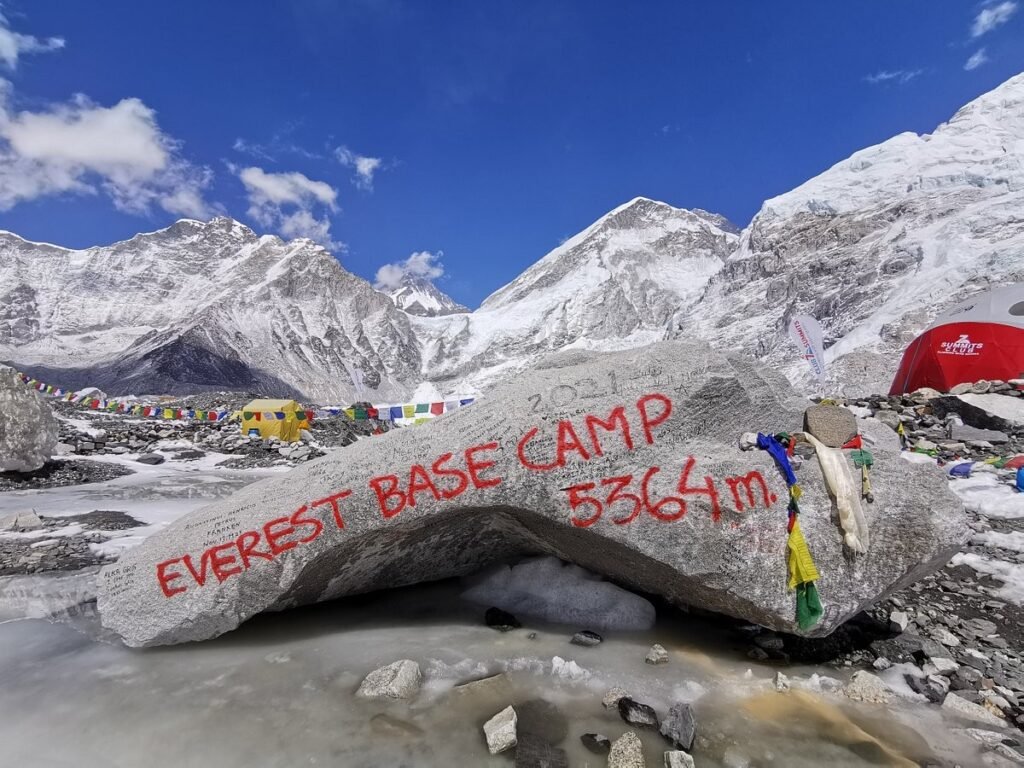
5. Everest Base Camp – The Ultimate Trekking Destination
Everest Base Camp is a dream destination for trekkers from around the world. The journey takes travelers through beautiful mountain villages, suspension bridges, and breathtaking Himalayan views. It is one of the most famous trekking routes in Nepal and offers close views of Mount Everest.Everest Base Camp (EBC) is a high-altitude trekking destination in Nepal that serves as the starting point for ascents of Mount Everest, the world’s highest peak. Renowned for its dramatic Himalayan scenery and cultural richness, the trek to EBC is one of the most popular and iconic adventures in the world.
Key facts
Coordinates: 28°0′26″ N, 86°51′34″ E
Location: Khumbu region, northeastern Nepal
Elevation: About 5,364 m (17,598 ft)
Typical trek duration: 12–14 days round trip from Lukla
Best seasons: Pre-monsoon (Mar–May), post-monsoon (Oct–Nov)
Trek overview
The Everest Base Camp trek follows the Dudh Kosi River through the Sagarmatha National Park, passing Sherpa villages such as Namche Bazaar and Tengboche. The route ascends gradually to ensure acclimatization, culminating at the base of Mount Everest, where trekkers can view the Khumbu Icefall and surrounding peaks like Lhotse and Ama Dablam.
Geography and altitude
The trail begins at Lukla (2,860 m) and climbs through alpine terrain to over 5,000 m. Thin air and low oxygen levels make acclimatization critical. The route traverses glacial valleys, rhododendron forests, and rocky moraines shaped by the Khumbu Glacier.
Culture and community
The region is home to the Sherpa people, whose Buddhist monasteries, prayer flags, and stupas enrich the journey. Key spiritual sites include Tengboche Monastery, where trekkers often receive blessings before proceeding higher. Local teahouses offer food and lodging, supporting the Khumbu economy.
Tourism and significance
Everest Base Camp trekking has become a major contributor to Nepal’s tourism industry and a symbol of adventure travel. It provides access to world-class mountain vistas without technical climbing, though altitude sickness and weather conditions pose real risks. Environmental and sustainability initiatives aim to preserve the fragile Himalayan ecosystem while maintaining the route’s accessibility.
Mustang is known for its desert-like landscapes, caves, and ancient Tibetan culture. It is one of the most unique places in Nepal. The region offers beautiful mountain views and a different experience compared to other parts of Nepal. Upper Mustang is especially famous for its old monasteries and traditional lifestyle.Mustang is a remote district in northwestern Nepal, part of Gandaki Province, bordering Tibet (China). Once an independent Himalayan kingdom, it remains culturally and geographically distinct, known for its arid trans-Himalayan landscapes, ancient monasteries, and preserved Tibetan Buddhist heritage. Its capital, Lo Manthang, is Nepal’s only walled town and a major cultural center.
Key facts
Population: ~14,000 (2021 census)
Province: Gandaki Province, Nepal
District HQ: Jomsom
Area: 3,573 km²
Elevation range: 1,372 – 8,167 m
Geography and climate
Situated in the rain shadow of the Annapurna and Dhaulagiri ranges, Mustang’s terrain is a high-altitude desert of canyons, cliffs, and dry valleys carved by the Kali Gandaki River. Annual rainfall averages under 260 mm, making it one of Nepal’s driest areas. The climate features warm, clear summers and long, cold, windy winters, with temperatures varying sharply between day and night.
History and culture
Formerly the Kingdom of Lo, Mustang was established around 1380 by Ame Pal. It became part of Nepal in the 18th century but retained its monarchy until 2008. Isolation until 1992 allowed deep preservation of Tibetan Buddhist culture seen in monasteries such as Thubchen, Jampa, and Ghar Gompa, and festivals like Tiji, celebrated each May. The region’s people, mainly Lopa and Thakali ethnic groups, maintain traditions of art, prayer walls, and mud-brick architecture that reflect both spiritual and environmental adaptation.
Natural and cultural landmarks
Key sites include Lo Manthang’s royal palace and monasteries, the Muktinath Temple—sacred to both Hindus and Buddhists—and the sky caves of Chhoser, with relics and Buddhist paintings dating back centuries. The Kali Gandaki Gorge, among the world’s deepest, and nearby peaks such as Annapurna I (8,091 m) and Dhaulagiri (8,167 m) frame Mustang’s dramatic scenery.
Tourism and access
Mustang attracts trekkers, motorcyclists, and cultural travelers seeking isolation and authenticity. The district divides into Lower Mustang, open to general tourism, and Upper Mustang, a restricted area requiring a government-issued permit (USD 500 for 10 days + USD 50/day extension) and licensed guide. Entry routes pass through Pokhara and Jomsom, reached by air or rough mountain roads.
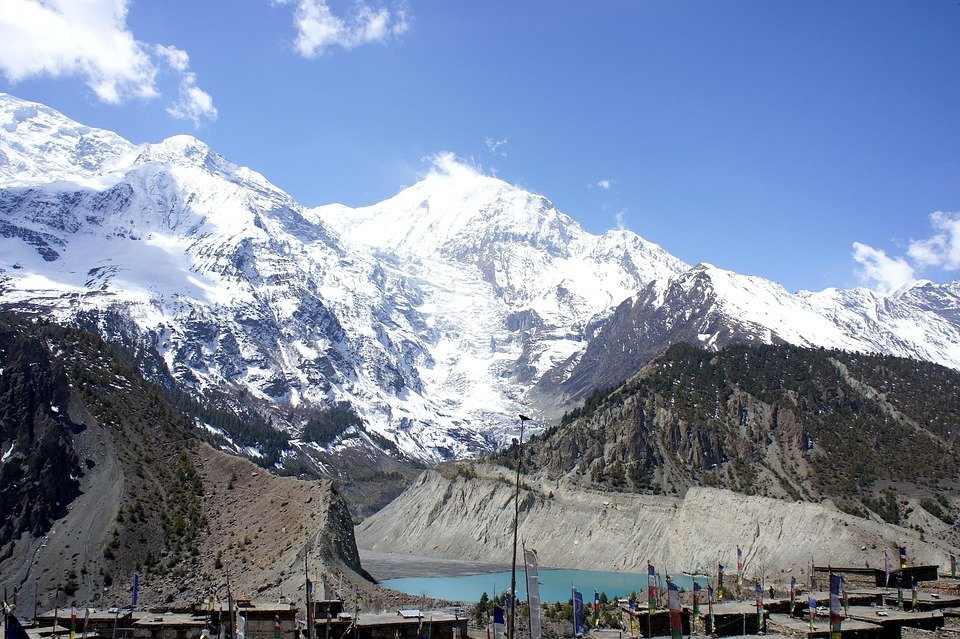
7. Manang – Beauty in the Himalayas
Manang is a beautiful mountain region known for its amazing landscapes, high-altitude villages, and trekking routes. It is part of the famous Annapurna Circuit and offers stunning mountain views, glaciers, and unique local culture.Manang is a remote Himalayan district in Nepal’s Gandaki Province, renowned for its dramatic mountain scenery, Tibetan-influenced culture, and importance as a hub on the Annapurna Circuit trekking route. Situated at around 3,519 meters (11,545 feet) above sea level, it is one of Nepal’s highest permanently inhabited valleys and a vital acclimatization point for trekkers crossing the Thorong La Pass.
Key facts
Population: ≈ 6,500 (2011 census)
Province: Gandaki, north-central Nepal
Headquarters: Chame
Area: ≈ 2,246 km²
Elevation range: 2,000–6,000 m (6,560–19,685 ft)
Geography and climate
Manang lies north of the Annapurna range along the Marshyangdi River valley. Its arid, high-altitude terrain forms part of the trans-Himalayan rain shadow, making it one of Nepal’s driest regions. Surrounding peaks include Annapurna II (7,937 m), Gangapurna (7,455 m), and Chulu East (6,584 m). The climate is alpine and sharply seasonal—spring (March–May) and autumn (September–November) offer the clearest skies and safest trekking conditions.
Culture and people
The district is home to the Manangi people, of Tibetan origin, whose culture blends Buddhism and ancient Bon traditions. Monasteries, prayer wheels, and mani walls mark villages such as Manang Village, Braga, and Ngawal. Polyandry once helped families manage scarce farmland. Festivals like Yartung (horse racing and archery), Losar (Tibetan New Year), and Dawa Dhukpa reflect enduring Himalayan customs.
Landmarks and attractions
- Thorong La Pass (5,416 m): The high point of the Annapurna Circuit linking Manang to Mustang.
- Tilicho Lake: At 4,919 m, among the world’s highest lakes, famed for turquoise glacial water.
- Gangapurna Lake & Glacier: A short acclimatization hike from Manang Village.
- Braga Monastery: Six-century-old gompa with rare Buddhist manuscripts.
- Ice Lake (Kicho Tal): A demanding day hike to 4,600 m with panoramic Annapurna views.
- Milarepa Cave: A sacred meditation site tied to the 11th-century Tibetan sage.
Economy and tourism
Historically a trading center between Tibet and Nepal, Manang’s economy now relies on tourism and subsistence farming of barley and potatoes. Since the late 1970s, the Annapurna Circuit has transformed the area with teahouses, lodges, and cultural tourism. Trekkers require an Annapurna Conservation Area Permit (ACAP) and a TIMS Card.
Access and conservation
Manang is reached by jeep or bus from Kathmandu or Pokhara via Besisahar and Chame, followed by road or trail travel. The Annapurna Conservation Area Project (ACAP) manages environmental protection and supports local livelihoods. Visitors are encouraged to trek responsibly, respect cultural sites, and acclimatize properly to the high altitude.
These destinations show the true beauty of Nepal. Whether you love mountains, culture, wildlife, or adventure, Nepal has something special for every traveler
Final Thoughts
Nepal is more than just mountains. It is a country full of culture, tradition, adventure, and natural beauty. Whether you want to trek in the Himalayas, explore ancient temples, or enjoy wildlife adventures, Nepal is the perfect destination.
Start your journey today and explore Nepal.