

Muktinath Temple is one of the holiest pilgrimage sites for both Hindus and Buddhists. Located in the beautiful Mustang region, the temple lies at a high altitude surrounded by snow-covered mountains.
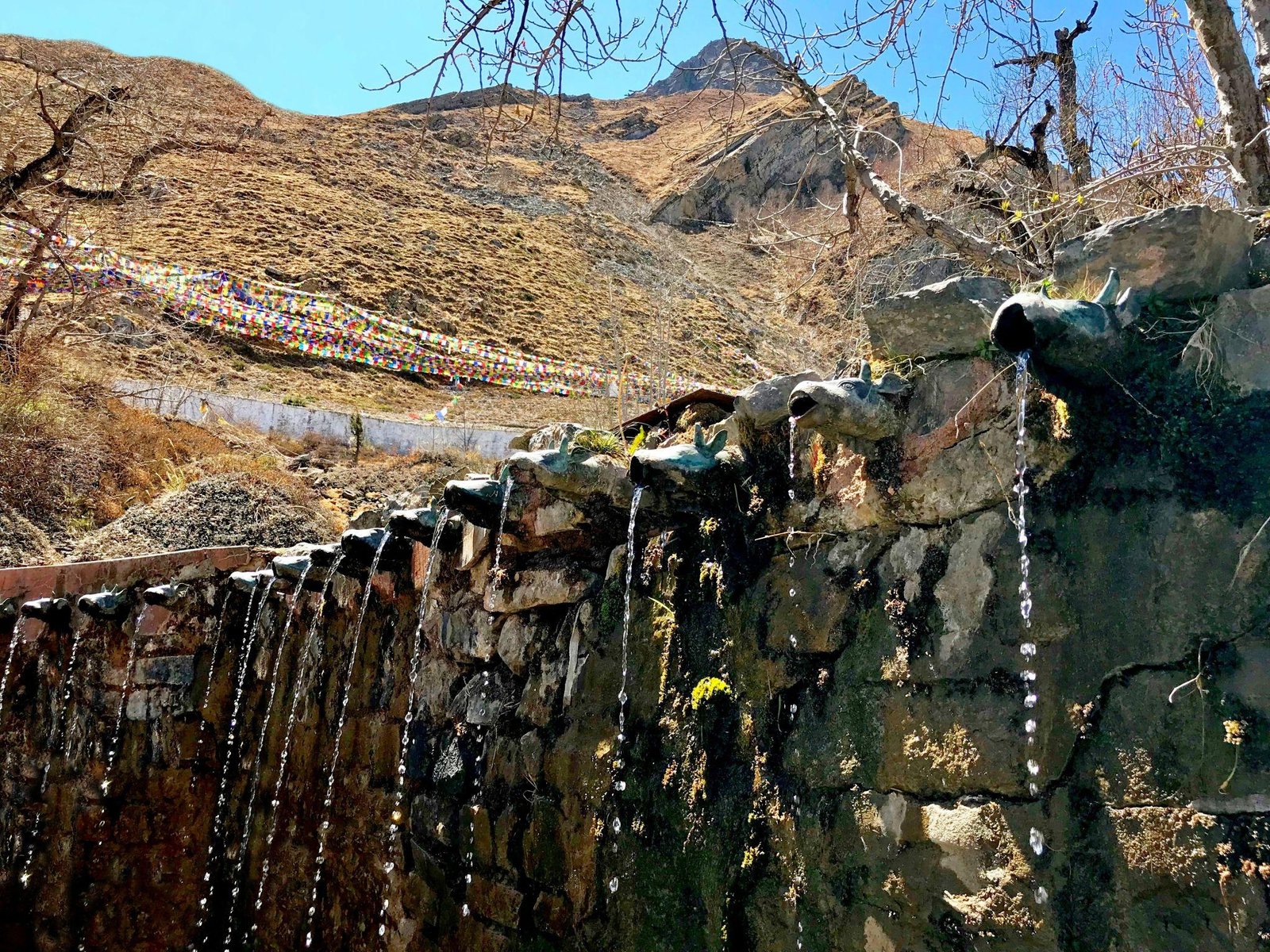
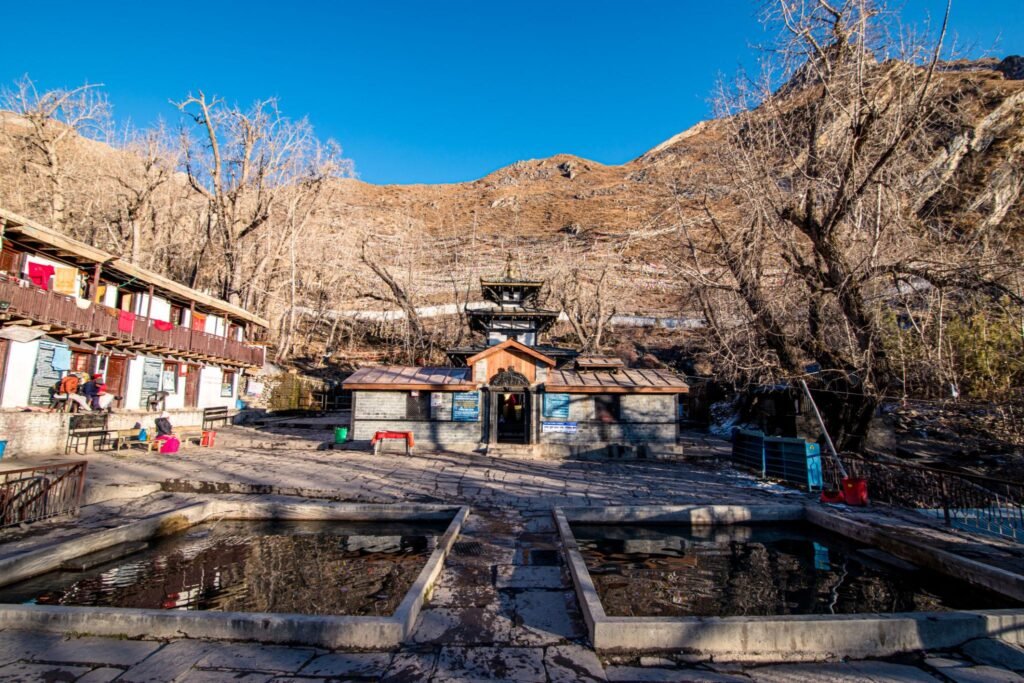
Hindus believe that visiting Muktinath brings salvation and freedom from sins. The temple is famous for its 108 holy water spouts where pilgrims bathe as part of religious rituals. The temple also contains an eternal flame that has been burning naturally for centuries.
The journey to Muktinath is both spiritual and adventurous because travelers pass through beautiful Himalayan landscapes, traditional villages, and mountain valleys.
Key facts
- Altitude: ~3,710–3,800 m (12,172 ft)
- Deities: Vishnu (Mukti Narayan) / Avalokiteśvara (Chumig Gyatsa)
- Built: Early 19th century under Queen Subarna Prabha of Nepal
- Notable features: 108 water spouts, eternal flame, twin sacred ponds
- Location: Baragung Muktichhetra Rural Municipality, Mustang, Gandaki Province
Setting and architecture
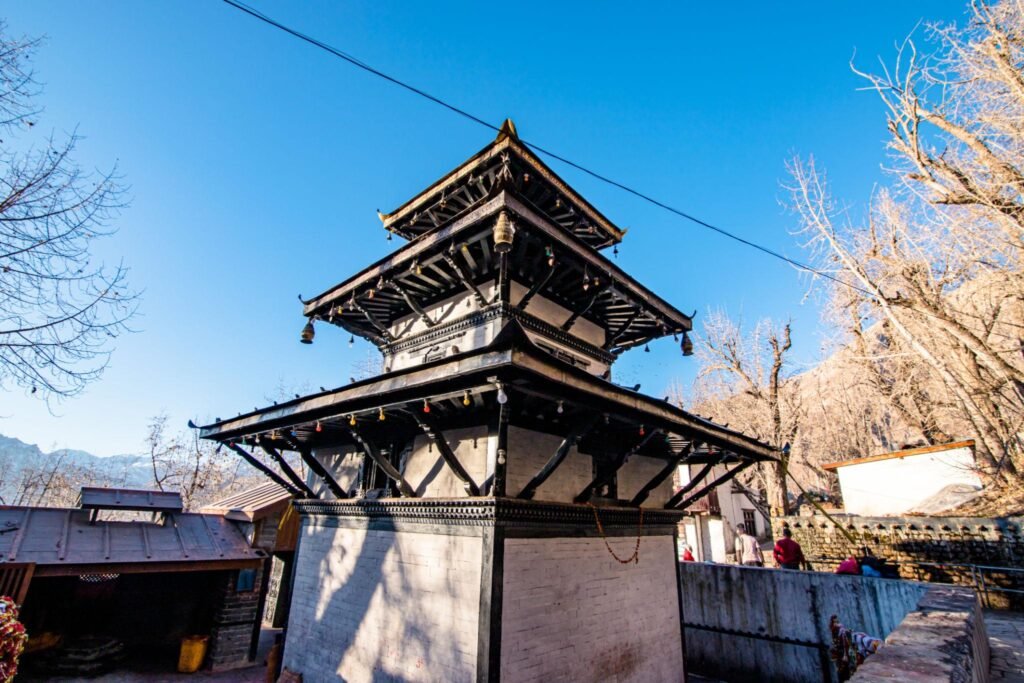
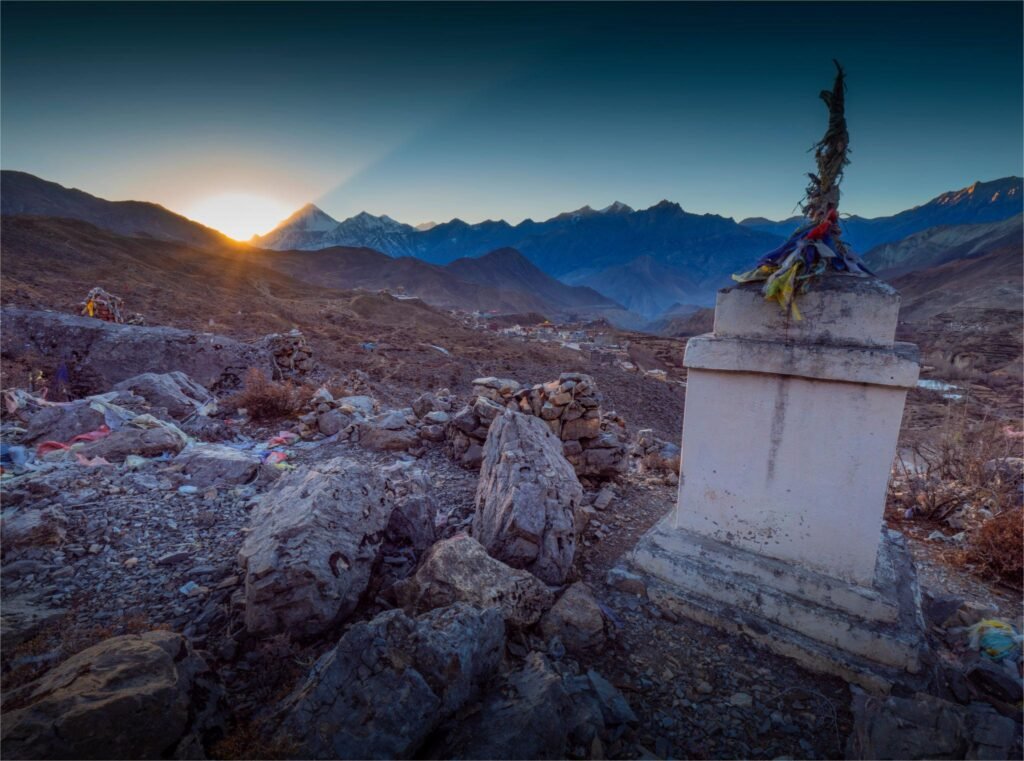
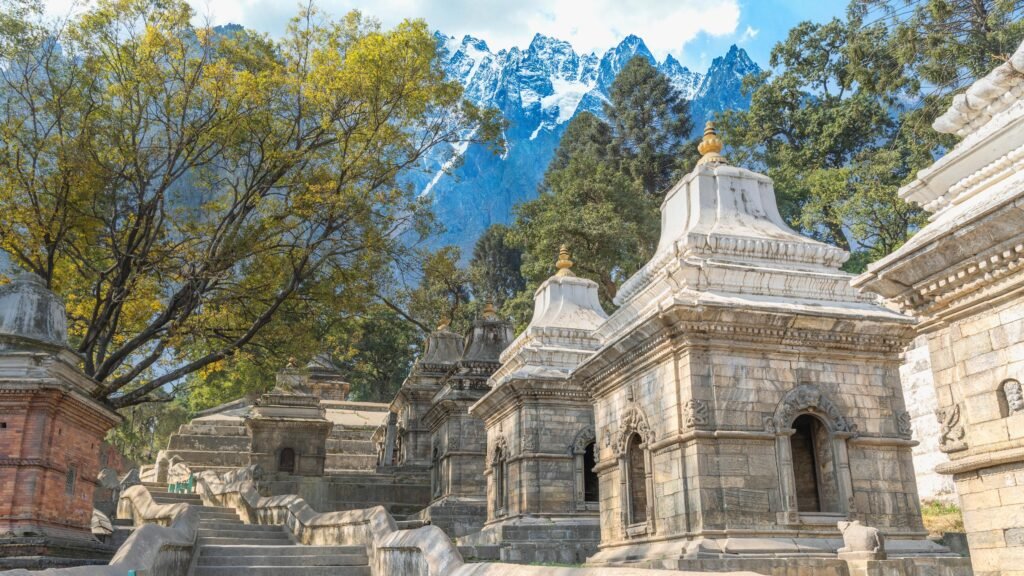
Perched on a high plateau below the Annapurna and Dhaulagiri ranges, Muktinath lies along the ancient India–Tibet trade route and today the Annapurna Circuit trek. The pagoda-style temple, built of stone and wood with a gilded pinnacle, houses a golden image of Vishnu. Around it are 108 bull-headed water spouts called Mukti Dhara, fed by glacial streams for ritual bathing, and two ponds (Mukti Kunda) for purification. Nearby, the Jwala Mai Temple shelters a natural gas flame burning beside flowing water, an emblem of the unity of earth, fire, air, and water.
Religious significance
For Hindus, Muktinath is one of the 108 Divya Desam shrines and one of eight Svayam Vyakta Kshetras where Vishnu is said to have manifested spontaneously. It is also linked to the legend of Sati as a Shakti Peetha. For Buddhists, known as Chumig Gyatsa (“Hundred Waters”), it marks a site where Guru Rinpoche meditated and is revered as a tantric power place associated with Avalokiteśvara. Buddhist nuns help maintain the shrine, reflecting its interreligious character.
Pilgrimage and access
Pilgrims reach Muktinath by road or trek from Pokhara (≈200 km), usually via Jomsom and Ranipauwa village. Flights connect Pokhara to Jomsom, and jeeps or footpaths cover the final 20 km. The area lies within the Annapurna Conservation Area, requiring ACAP and TIMS permits. Altitude acclimatization is essential due to thin air above 3,700 m.
Seasonal highlights and festivals
Spring (Mar–May) and autumn (Sep–Nov) offer clear skies and moderate temperatures. Major occasions include Janai Purnima (August) for Hindu devotees, and Losar (Tibetan New Year) and Buddha Jayanti for Buddhists. The nearby Yartung horse festival in late summer celebrates local culture.
Cultural and natural context
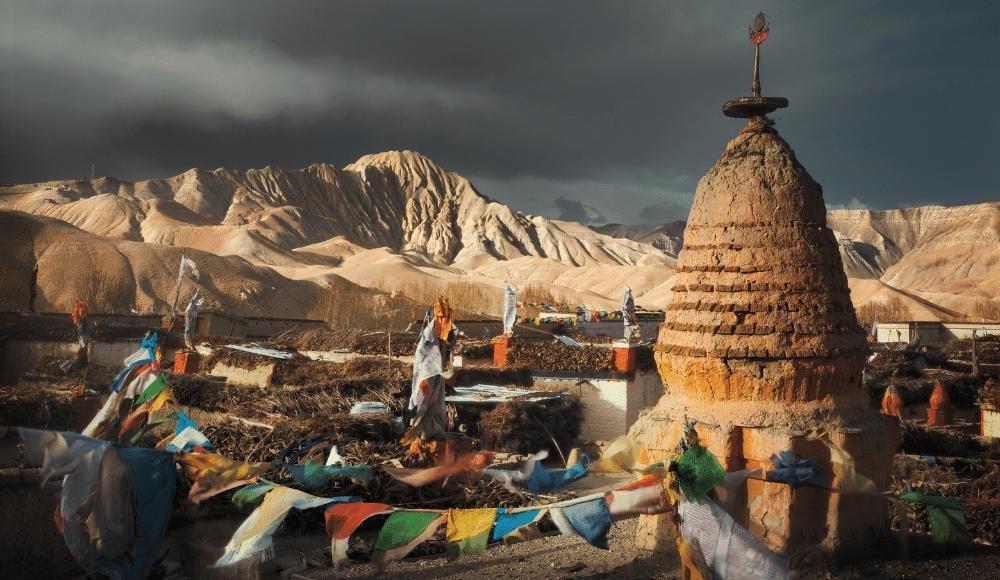
Surrounding villages—Ranipauwa, Kagbeni, and Marpha—blend Thakali and Tibetan traditions. The nearby Kali Gandaki River yields black shaligram fossils, worshiped as Vishnu symbols. The stark desert landscape, snow-capped peaks, and persistent winds give Muktinath both its rugged beauty and its reputation as a gateway to spiritual liberation.
Importance of Religious Tourism in Nepal
Religious tourism is one of the most important parts of Nepal’s tourism industry. Pilgrims and visitors traveling to temples, monasteries, and sacred sites help support local economies and create employment opportunities. Hotels, restaurants, guides, transportation services, and local handicraft businesses all benefit from tourism.
Religious sites also help preserve Nepal’s ancient traditions, architecture, and spiritual culture. Many communities depend on tourism income to improve education, healthcare, and infrastructure in their areas.
Nepal’s peaceful spiritual atmosphere also attracts travelers seeking meditation, yoga, and personal peace. Because of this, Nepal has become one of the world’s leading destinations for spiritual and cultural tourism.
Conclusion
Religious sites in Nepal are not only important places of worship but also major attractions that contribute significantly to tourism, cultural preservation, and local economic development. These destinations attract pilgrims, spiritual seekers, and travelers from around the world who come to experience Nepal’s peaceful environment and timeless traditions.
Exploring Nepal’s religious sites provides visitors with an opportunity to learn about the country’s deep spiritual roots, traditional architecture, and cultural values. At the same time, religious tourism helps support local communities, preserve historical heritage, and promote Nepal as one of the world’s leading destinations for spiritual and cultural travel.
With its sacred temples, monasteries, and spiritual atmosphere, Nepal continues to stand as the spiritual heart of the Himalayas, offering meaningful experiences and unforgettable memories for every visitor.