
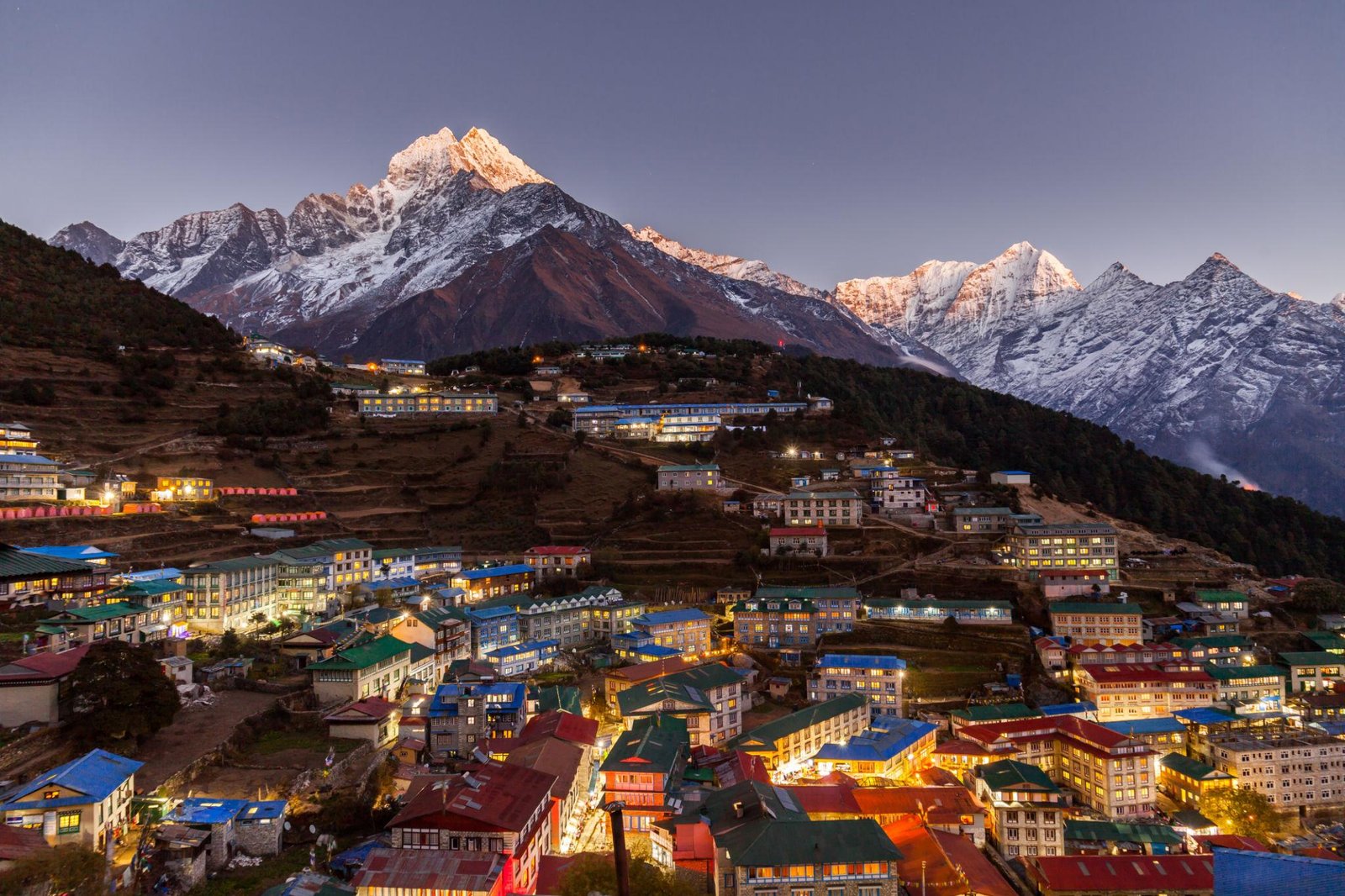

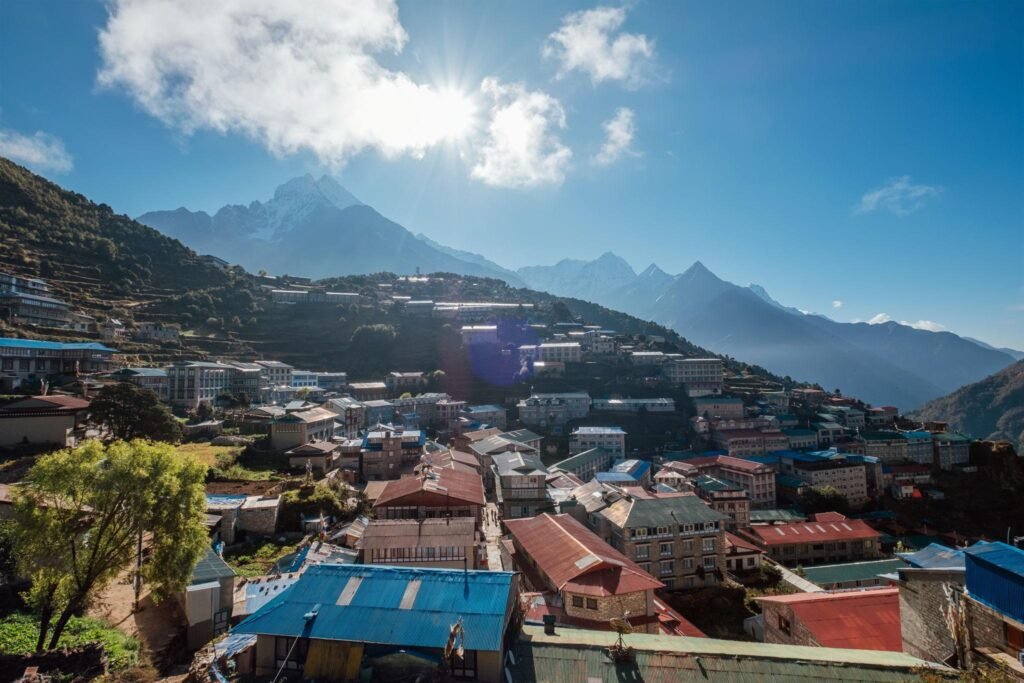
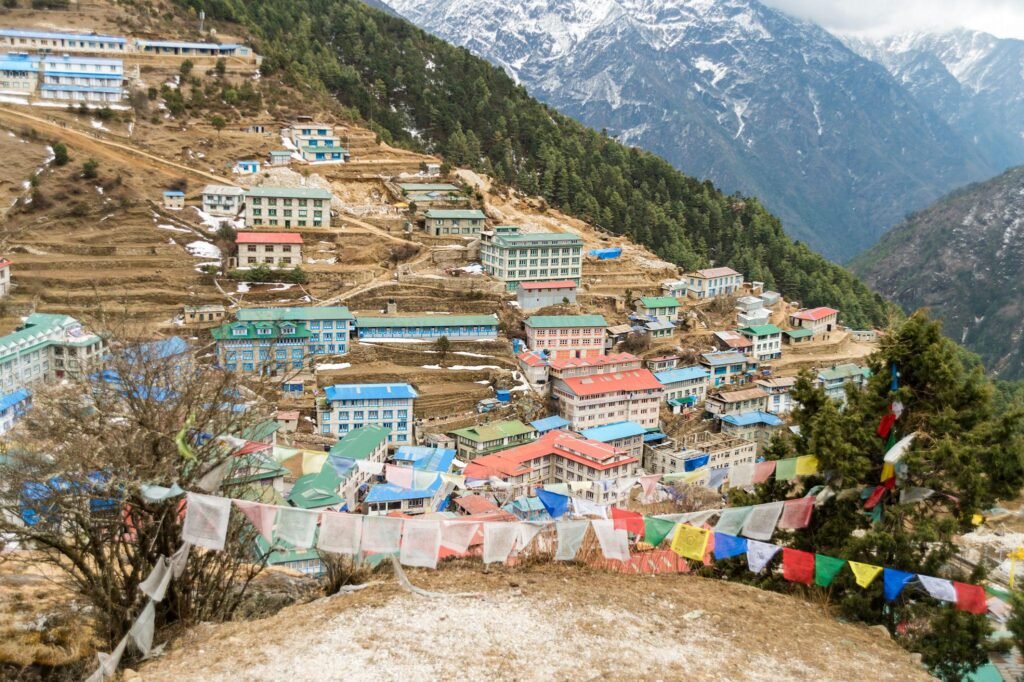
Namche Bazaar is a high-altitude town in the Solukhumbu District, serving as the main commercial and cultural hub of the Khumbu region. Located at about 3,440 m (11,286 ft) within Sagarmatha National Park, it is famously known as the “Gateway to Everest” for its pivotal role in the Everest Base Camp trek and its deep connection to Sherpa people heritage.
Namche Bazaar is also the cultural heart of the Sherpa community. The Sherpa people are well known for their strength, hospitality, and deep connection with the mountains. In Namche, travelers can experience traditional Sherpa lifestyle, visit local monasteries, and learn about their rich Buddhist culture. Small museums and cultural centers in the town also help visitors understand the history of mountaineering in the Everest region.
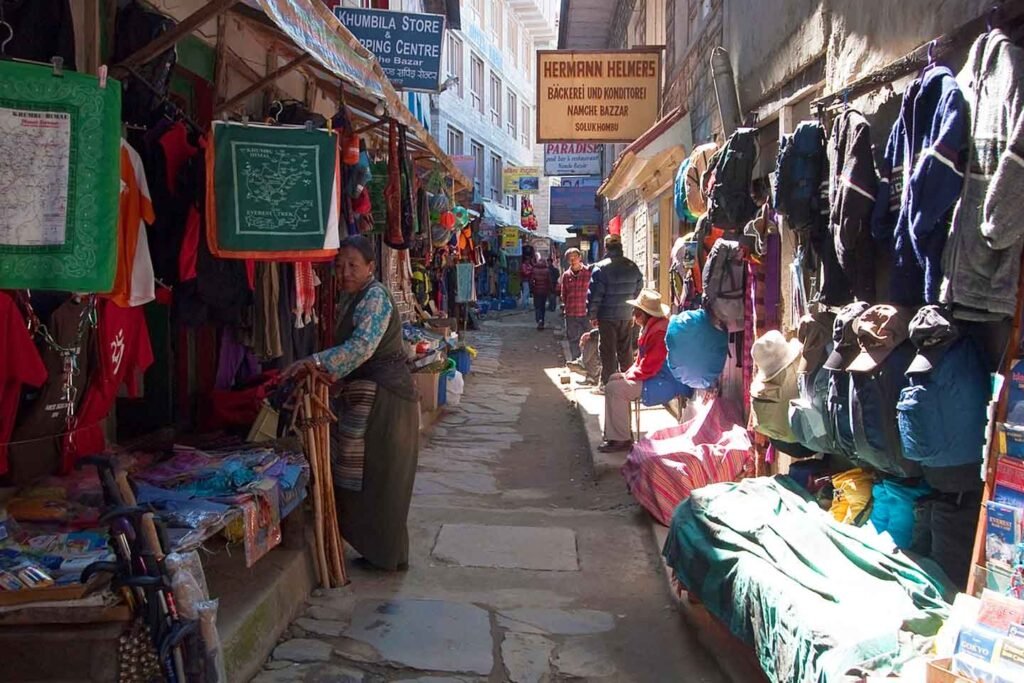
Despite being a remote mountain town, Namche Bazaar is quite developed for tourists. It has comfortable lodges, bakeries, cafes, gear shops, and small markets where trekkers can buy supplies or relax. Internet services, bakeries, and coffee shops make it a surprising and lively place in such a high-altitude region.
One of the most important purposes of staying in Namche Bazaar is acclimatization. Trekkers usually spend at least one or two nights here to adjust to the altitude before moving higher toward places like Tengboche or Everest Base Camp. Nearby hiking spots like the Everest View Hotel and Khumjung village offer short treks with stunning views.
Key facts
- Elevation: 3,440 m (11,286 ft)
- Province: Koshi Province (formerly Province No. 1)
- Population: ≈ 1,600 permanent residents
- Main economy: Tourism and trade
- Best visiting seasons: Spring (Mar–May) and Autumn (Sep–Nov)
History and role
For centuries, Namche Bazaar was a vital trans-Himalayan trading post between Nepal and Tibet, where Sherpas bartered salt, wool, and grain. After the 1953 first ascent of Mount Everest by Tenzing Norgay and Sir Edmund Hillary, it evolved from a quiet market village into an international mountaineering center. The town’s amphitheater-shaped setting on a hillside offered a natural shelter and meeting point that continues to attract trekkers and traders.
Culture and community
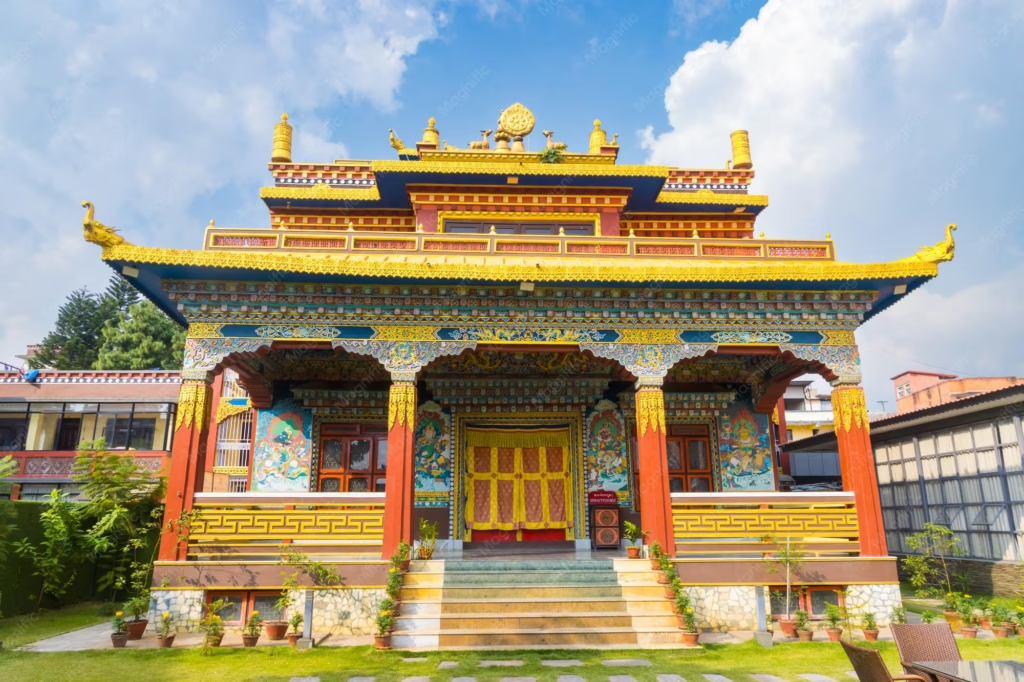
Namche remains the cultural heartland of the Sherpa people. The town features Buddhist monasteries, prayer wheels, mani stones, and fluttering prayer flags reflecting Tibetan Buddhist traditions. The Sherpa Culture Museum preserves artifacts of traditional Sherpa life, while the annual Dumji Festival celebrates local spiritual heritage. Weekly Saturday markets revive its trading legacy, drawing villagers and Tibetan traders with yak cheese, wool, and handicrafts.
Tourism and acclimatization
At its altitude, Namche Bazaar serves as the primary acclimatization stop on the Everest Base Camp route. Trekkers typically rest here for two nights, exploring nearby hikes such as the Syangboche Airstrip and the Hotel Everest View (3,880 m) for panoramic mountain vistas. The town offers accommodations from budget teahouses to upscale lodges, cafés, bakeries, and even the world’s highest Irish pub.
Infrastructure and access
Namche hosts banking facilities, a small hospital, and reliable though limited internet and power from the Thame–Namche hydropower plant. It is reached by a 30-minute flight from Kathmandu to Tenzing–Hillary Airport, followed by a two-day trek via Phakding. Helicopter access is available for emergencies and scenic flights.
Environmental importance
Situated inside Sagarmatha National Park, Namche faces environmental pressures from tourism and climate change. Initiatives like the Sagarmatha Next Center and local committees promote sustainable waste management and eco-friendly trekking practices, balancing visitor growth with conservation of the Himalayan ecosystem.
Namche Bazaar today stands as both a gateway for global adventurers and a living center of Sherpa culture, linking ancient trade, mountain spirituality, and modern Himalayan exploration.
Why These Towns Are Important for Nepal Tourism
These towns are not only beautiful travel destinations but also major contributors to Nepal’s tourism industry and economic growth. Tourism creates jobs, supports local businesses, preserves culture, and promotes Nepal globally.
Exploring these towns helps travelers discover:
- Rich cultural heritage
- Himalayan adventure
- Religious harmony
- Natural beauty
- Local traditions
Conclusion
Namche Bazaar is one of the most important and beautiful mountain towns in Nepal. Known as the gateway to the Everest region, it is a key stop for trekkers heading toward Everest Base Camp. Surrounded by stunning Himalayan peaks, this small town offers breathtaking views, fresh mountain air, and a unique experience of Sherpa culture.
Namche Bazaar is not just a resting point for trekkers but also a lively town filled with hotels, cafes, shops, and local markets. It gives travelers a chance to adjust to the high altitude while enjoying the natural beauty and warm hospitality of the Sherpa people. The town also offers amazing viewpoints where visitors can see some of the world’s highest mountains.
In simple words, Namche Bazaar is a perfect blend of adventure, culture, and natural beauty. It is a must-visit destination for anyone exploring the Everest region and experiencing the true spirit of the Himalayas.